
Fixed restorations.
The core of what the laboratory does, refined since 1988 — every crown type on the prescription, from single units to multi-unit bridgework.
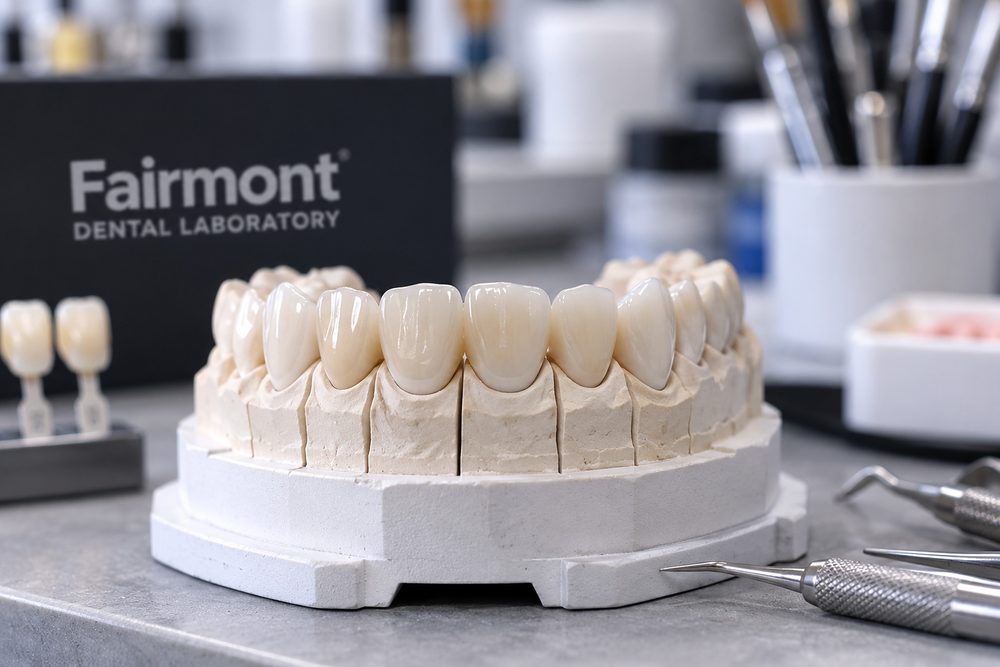
Choosing between them
Four questions, in order. How much clearance is genuinely available — the constraint that cannot be recovered once a tooth is prepared. Can the field be isolated well enough to bond. What does the functional picture look like: the antagonist, evidence of parafunction, span length. And how demanding is the aesthetic requirement, assessed honestly.
Those four resolve most cases. Limited clearance and heavy function point to zirconia or cast metal. A subgingival margin that cannot be isolated rules out anything bond-dependent. A single central beside an intact natural neighbour points to layered lithium disilicate with a try-in stage.
Where the answers conflict, call before preparing. The material selection guide sets the options out side by side.
What the prescription needs
Tick the crown type and select the alloy where one applies. Give the shade with the guide named, and mark the tooth on the design chart in FDI notation.
Then the design instructions the form asks for: labial margin as metal, combination or porcelain butt; occlusal relief as positive or foil relief with a number of foils; interproximal contact as normal, broad or point with tightness normal or tight; and for bridgework the pontic form.
Add the antagonist and anything unusual — a short preparation, clearance accepted as tight, a margin uncertain on one aspect. Those change design decisions and none is visible in a record.
Quality control on every case
Every case is inspected under the microscope at two stages — after the wax-up and again after the frame is finished — so the degree of fit is verified before any aesthetic work begins.
For porcelain work, a layering technique is combined with systems sourced from manufacturers around the world. Whether the case is a single crown or a full-mouth reconstruction, it moves through the same procedures.
Alloy identification certificates are provided for your records. See quality assurance.
Preparation and records
Reduction figures by material and margin type are collected in preparation guidelines, and the chairside checks by case type are in preparation guides.
Verify clearance with an index or bite registration material rather than by eye, and check in excursion as well as intercuspation. Review the preparation along the intended path of insertion for undercuts before the record is taken.
For shade, take it at the start of the appointment before the enamel dehydrates — shade matching covers the rest.
From a practice we work with

Excellent dentistry depends on excellent laboratory support. Fairmont consistently delivers restorations that meet our expectations for function, aesthetics and reliability. Their professionalism makes them an outstanding partner.
In this section
Three-Quarter Crowns and Onlays
Partial coverage restorations preserving sound tooth structure.