
Implant restorations.
Implant restorative work depends on information that cannot be read from a record. Geometry tells us where the implant sits; it does not tell us which system we are restoring.
What every implant case needs in writing
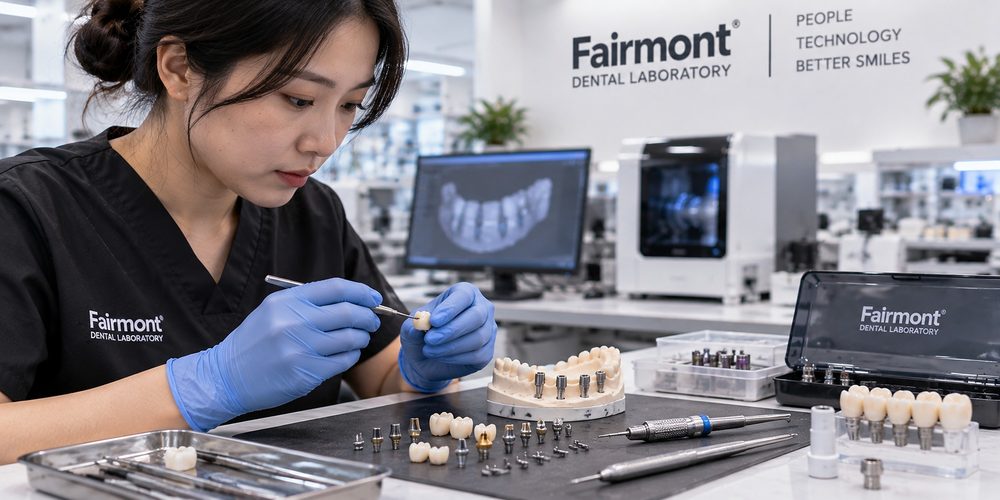
The manufacturer and product line. The platform diameter. The connection type. Whether you intend a screw-retained or cement-retained restoration. Whether you expect a stock or custom abutment. The antagonist, and any concern about interocclusal space.
Connections that look similar in a photograph are frequently not interchangeable, and a component from the wrong product line either will not seat or will seat without the intimate fit the connection was designed to provide.
The current prescription form has no implant section, so this goes under Special Instructions. A photograph of the component packaging from the placement appointment settles most of it in one image.
Shared cases lose information between clinicians
Where an implant is placed by one clinician and restored by another, the surgeon knows the system, the platform and why the implant was positioned as it was. The restoring dentist knows the prosthetic plan.
If neither takes responsibility for transmitting the component detail, the laboratory receives half the picture from each and the case stops while it is assembled.
Agree at the outset who owns the laboratory relationship for the case, and make sure the placement record reaches that person.
Decisions worth making before components are ordered
Screw or cement retention, stock or custom abutment, and whether the angulation permits the retention you intend. Each affects what is ordered, and reversing any of them afterwards means ordering again.
Interocclusal space is the other early check. It is shared between the abutment and the restoration above it, and a case that appears to have adequate clearance for a crown may not once abutment height, screw channel and material thickness are accounted for.
Where a case is uncertain, call before ordering. Implant component selection sets out what each decision affects.
From a practice we work with

Predictability matters in dentistry. Fairmont consistently provides restorations with excellent fit, natural aesthetics and dependable turnaround. Their team understands that quality laboratory work directly affects the patient experience.